

The books listed in this section don't easily fit into one specific category, but rather include a focus which spans a number of areas.
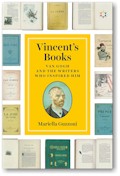
Mariella Guzzoni does a masterful job, especially considering the considerable challenge a book with this specific scope entails. In order for her work to be successful, it was essential that Ms. Guzzoni have an intimate and in-depth familiarity not only with Van Gogh's artworks and letters, but also the dozens of books he describes with great passion. I'm pleased to say that Ms. Guzzoni excels in all three areas.
At its heart Vincent's Books explores how art and literature overlapped and co-existed in the artistic vision of Vincent van Gogh. Ms. Guzzoni writes how "literature, art and life became an integral part of [Van Gogh's} work: 'books, reality and art are the same kind of thing for me.' (Letter 312)"
Vincent's Books explores Van Gogh's reverence for literature. And not only how the literature influenced his approach to art, but also the ways in which Van Gogh perceived artists and writers to be kindred spirits. Van Gogh envisioned his art as an expression of the world in the unique way that he perceived it. He saw writers in a similar fashion. In a letter to his sister Willemien, Van Gogh wrote "On the contrary, if one wants truth, life as it is, De Goncourt, for example, in Germinie Lacerteux, La fille Elisa, Zola in La joie de vivre and L’assommoir and so many other masterpieces paint life as we feel it ourselves and thus satisfy that need which we have, that people tell us the truth." (Letter 574). I've read Van Gogh's letters from beginning to end more than once, but through Vincent's Books I gained new insights. Here Van Gogh, the painter, writes to his sister discussing how writers "paint life."
To further this point, Ms. Guzzoni expertly shows how literature had a direct influence on Van Gogh's art. I know Van Gogh's artworks backwards and forwards and know the letters well too. And I've always admired the beautiful painting Tarascon Diligence. In Vincent's Books the literary inspiration for this painting is discussed. Vincent wrote to Theo "Have you re-read the Tartarins yet? Ah, don’t forget to! Do you remember in Tartarin the lament of the old Tarascon diligence — that wonderful page? Well, I’ve just painted that red and green carriage in the yard of the inn. You’ll see." (Letter 703). Tarascon Diligence wouldn't be hanging on the walls of the Princeton Art Museum were it not for Alphonse Daudet's novel Tartarin of Tarascon.
An exhaustive knowledge of Van Gogh's letters was instrumental in making Vincent's Books such a success. But Ms. Guzzoni provides even more welcome insights in that she'll quote unpublished letters between other members of the family (from sister Elisabeth to Theo's fiancé Jo Bonger, for example). In addition, Ms. Guzzoni has an admirable way of finding interesting and illuminating details in Van Gogh's artworks that surprised me. Like Martin Bailey, she has a unique talent for seeing Van Gogh's works with crystal clarity. Ms. Guzzoni writes of Van Gogh's art astutely: "Nothing in nature was strange to Vincent either. His almost aerial views, tall horizons without a sky, the waves, the backgrounds or skies sketched with a reed pen at Japanese speed--all in an increasingly personal style--had by now become a genuine calligraphy; personal, confident, unmistakable."
Van Gogh was an impassioned reader. Many of his paintings and drawings were directly influenced by the books that sustained him, especially during emotionally harrowing times. Vincent's Books provides wonderful insights into this profound and complex relationship between painter and writer. Mariella Guzzoni writes "By dissolving the boundaries between the arts, [Van Gogh] opened an internal dialogue with his favourite authors that greatly contributed to his development as an artist."
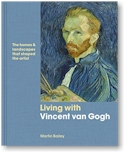
Here Martin Bailey explores the many places Van Gogh lived over the course of his 37 short years. In 1886 Van Gogh wrote "I am not an adventurer by choice but by fate and feeling nowhere so much myself a stranger as in my family and country." (Letter 569). So it's an interesting premise to follow Van Gogh in his travels through life while watching his remarkable progression as an artist. It's important to note that the revelations of Van Gogh's evolving skills as an artist depend on high quality reproductions of the art works themselves and I'm happy to say, as with his other books, the images in this book are first rate--the best being published today without question.
One of Martin's great strengths is his attention to detail. Again, as with his other books, I found that in Living with Vincent van Gogh Martin would focus on small points in the art works that I'd never seen before. The man in red in The Grote Markt (and the minute reflection in the rain covered cobble stones), for example. Or something as non-descript as the roaming chickens in Cottage and Woman with Goat. These are small elements of the works, no doubt, but elements that I haven't noticed over more than twenty years of repeated viewings and this makes for a more satisfying experience when examining the works.
The one thing I noted in Living with Vincent van Gogh was that at times Martin falls back on straightforward biographical content and provides less historical background about the places Van Gogh lived than I would have liked. There are reasons for this, of course. So many of the dwellings (and their environs) where Van Gogh once lived are now gone. Also, another obstacle to the research is that some of the most famous spots where Van Gogh lived: the vicarage in Nuenen, 54 Rue Lepic in Paris or Vincent's room at the asylum in Saint-Rémy, for example, are still standing, but the various occupants of these locations have, over the many years, been notoriously private regarding their famous residences. And understandably so. I can't recall if a contemporary photograph inside Theo's apartment at 54 Rue Lepic has ever been published.
Having said that, I do think that more space could have been given to those locations that are more accessible or well known historically. The Ravoux Inn in Auvers-sur-Oise where Van Gogh died, for example. Perhaps a page or so could have been devoted to its history up until the present day. Also, Daubigny's house would have made for an interesting mention. Earlier in his life Van Gogh produced a lovely drawing of Churches at Petersham and Turnham Green. Van Gogh actually gave a sermon here. What was the church's history? Whatever became of it (it was torn down)? It's never discussed.
I would definitely recommend Living with Vincent van Gogh. It's what I've come to expect from Martin Bailey. Engaging and informative writing backed up by rock solid research.
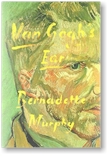
This book, an absolute wonder from beginning to end, was a true delight for me to read. I had some concerns going in. "Oh, the ear." One of the most well known and yet most poorly understood details of Vincent van Gogh's complex life. Others have written about "the ear incident" so could Bernadette Murphy bring something new and interesting to the table?
The answer is a resounding and unqualified yes. Van Gogh's Ear is the best book on the subject of Vincent van Gogh that I've read in years. I approached the book with no expectations one way or the other, but soon realized that I held in my hands a real gem.
Let me say first off that Bernadette Murphy is a born researcher. Her research efforts are dogged, clever and enlightening. The Daily Mail described Van Gogh's Ear as having "the pace of a detective novel" and the Daily Telegraph described Ms. Murphy as a "Sherlock Holmes." Both of these comments are spot on.
One of my favourite Dutch words is "monnikenwerk." A good friend and researcher at the Van Gogh Museum taught me this word. It comes from the image of the lone monk leaning over his desk and painstakingly copying illuminated manuscripts. This is "monk's work": a task that is slow, meticulous and incredibly detail oriented. Much of my own Van Gogh work over the years could be described as "monnikenwerk." Proceeding at a snail's pace, maddeningly exhaustive, but ultimately very satisfying personally.
Bernadette Murphy is a true master of "monnikenwerk" and I mean this in the most flattering way possible. I'm a great admirer of good research which is why Van Gogh's Ear proved to be so enjoyable. It's not just that Ms. Murphy isn't afraid to roll up her sleeves and spend countless hours in some dusty municipal archive--it's much more than that. What I find so satisfying in Mr. Murphy's research is that she questions everything and takes nothing for granted.
The story of Vincent van Gogh is an old one and one that's been well documented for more than a century now. The ear incident: check. Starry Night: check. Absinthe: check. The suicide: check. What amazes me is that Bernadette Murphy approached the Van Gogh story with her own preconceived notions about the "mad, ear-cutting Dutch painter," but then her brilliant research lead her to the conclusion that "Now, so many years later, I realize that practically everything I thought I knew about Vincent van Gogh in Arles when I set off on this adventure has turned out not to be true."
Van Gogh's Ear takes many of the well accepted tropes of Van Gogh's life and turns them upside down. Everyone knows that Van Gogh was addicted to absinthe (except that he almost certainly wasn't). The infamous Arles petition was the result of huge number of Arles residents fearing for their safety with an insane painter on the loose (except that's not true). Van Gogh gave his severed ear to a prostitute for safe keeping (Ms. Murphy's uncovering of the true story of "Rachel" is far more interesting, and sad, than is previously known).
Van Gogh's Ear (and it should be noted that the book thoroughly covers the ear incident, but also so much more) is a treasure with new surprises and insights on almost every page. Ms. Murphy is not only a tenacious and methodical researcher with a discerning mind, but also one who creatively thinks of ways to uncover fascinating new revelations from well trodden terrain.
In addition, Bernadette Murphy's musings on Van Gogh himself as well as his art works are always intelligent and insightful. Murphy sees beyond the mad ear-slasher and notes instead that "his extreme behaviour in Arles looks less like a single crazy episode than an act of desperation by someone profoundly unwell. He was impetuous, intense, yet at the same time oversensitive and deeply emphatic."
In the end, I can't recommend Van Gogh's Ear highly enough. A masterpiece of research and written in a style that's entertaining and engaging. Bernadette Murphy's book is a triumph.
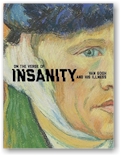
Does this book answer the question of what, ultimately, was wrong with Van Gogh? No, nor can it. Some questions will remain forever unanswered, but the book does draw some strong conclusions and convincingly dismisses some of the more recent theories (schizophrenia, Ménière's disease, acute intermittent porphyria).
While I think that the title is somewhat unfortunate--too harsh and overwrought--there's no question that the book On the Verge of Insanity presents one of the best written and most well balanced investigations on the subject.
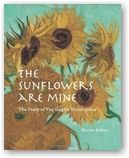
Martin Bailey, a British scholar and journalist, has a decades-long record of Van Gogh research. In The Sunflowers Are Mine Bailey explores the history of Van Gogh's iconic seven sunflower paintings--from Van Gogh's first brush strokes to their long and colourful journey over the course of more than a century and a quarter. The book is richly illustrated--not just with excellent images of the sunflower works themselves, but also with many historical photographs rarely seen. In fact, the image of Vase with Five Sunflowers is a remarkable discovery of Bailey's own diligent research. A lovely colour reproduction of superior quality and never before published outside of Japan.
The Sunflowers Are Mine is as insightful and informative as it is engaging. Bailey's research is beautifully presented and his writing style is always compelling. Bailey isn't afraid to share his own opinions and personal observations, a trait that makes the book so entertaining. I smiled, for example, when Bailey describes the article written by Albert Aurier, the only writer to publically praise Van Gogh in his lifetime, as "highly convoluted." Much attention has been given to Aurier and his article, and rightfully so, but few people have ever observed that Aurier, at least judging from the tortured and flowery flavour of his piece, wasn't a stellar writer.
I found The Sunflowers Are Mine to be extremely rewarding. A rich and praiseworthy study of these remarkable art works. Martin Bailey's many books and articles focusing on Van Gogh are well known and hugely respected. The Sunflowers Are Mine is a valuable and welcome addition to his work. A must-read.
While the book could have been better illustrated (33 Otto Wacker forgeries, for example, are shown as small thumbnails over only two pages), I nevertheless highly recommend A Real Van Gogh. A marvel of skillful and insightful research.
Of course, there's a genuine risk of putting words into the mouth of Van Gogh, but Simon Parke's latest "Conservations with" book cleverly avoids this trap by using Van Gogh's own text. The book is structured as an ongoing question and answer interview with Van Gogh. The questions, posed by Parke, are interesting and insightful ranging from diverse topics such as religion, art and madness. The answers are taken from Van Gogh's actual correspondence with his brother Theo and others. In other words, Van Gogh's answers in this "conversation" are his own.
I found the composition and editing of Conversations with Van Gogh to be deftly handled. In less capable hands, this conversation could have been clumsy with the round peg, so to speak, of Van Gogh's words, being forced into the square hole of the submitted questions. But Simon Parke does a nice job of seamlessly weaving his astute questions together with Van Gogh's own musings to form a nicely flowing and engaging narrative.
Definitely recommended for those who may find the newest six volume set of Van Gogh's letters a bit daunting, but who are still interested in exploring the mind of Vincent van Gogh in the artist's own words.
Following Van Gogh is superior to other books like it in that it's written in an engaging manner and is far more accurate and comprehensive than its predecessors. The book is well researched by Nouws (who himself hails from Zundert--Van Gogh's birth place) and, very importantly, it's completely up-to-date with regards to newly opened historical locations. While the book is excellent, I would only offer two small suggested changes (for the second edition perhaps?). Van de Wijngaard's photographs often don't match the chapter--in other words, a photograph of Isleworth will be found with the Paris chapter or a shot of the Borinage will appear in the Amsterdam chapter. In addition, a map of all the Van Gogh-specific locations would have been a handy accompaniment to each chapter. But these points are minor. This book is, without question, the best of its kind. For those interested in walking the same paths that Vincent van Gogh once did, visiting the same churches, drinking in the same cafes, Following Van Gogh is indispensable.
(Available in three different languages: English, Dutch and French.)
Van Gogh's Table at the Auberge Ravoux is an engaging and entertaining exploration of Vincent van Gogh, his life and the cuisine of his time. The first half of the book, written by Fred Leeman (former chief curator of the Van Gogh Museum in Amsterdam) follows Van Gogh's life--specifically focusing on the cafes and restaurants he frequented. As Vincent van Gogh's true potential as an artist blossomed, so too did his affinity toward the cafe world. For Van Gogh, the cafe was a place to socialize, argue, eat, drink and was often the subject of his most famous artworks (Cafe Terrace, Night Cafe and Restaurant de la Sirène at Asnières to name just three). Leeman's exploration of Van Gogh's life is extremely well written and is accompanied by superb illustrations.
Part One of Van Gogh's Table concludes with an in-depth section by Julia Galousy of the history of the Auberge Ravoux, the inn where Van Gogh lived, took his meals and ultimately died in 1890. The inn, now owned by Belgian Dominique-Charles Janssens, welcomes visitors today--just as it did in Van Gogh's time--with an inviting atmosphere and traditional French cuisine. Galousy's piece is an excellent segue into the second half of the book, by Alexandra Leaf. Part Two is a delightful overview of French cuisine in the Auvers-sur-Oise region along with dozens of recipes.
While it's true that Vincent van Gogh was malnourished for much of his last ten years, he was fortunate to find healthy food during his stay at the Ravoux Inn. Leaf discusses the types of fare Van Gogh would have eaten: cuisine populaire (traditional home-style cooking), cuisine du terroir (regional cooking) and cuisine bourgeoise (fancy home cooking). An interesting history of each type of cuisine is presented along with the accompanying recipes (such as "Rosemary Roast Chicken" or "Asparagus with Hollandaise Sauce") that offer the reader a taste of the food Van Gogh himself might have enjoyed during his time in Auvers.
Van Gogh's Table at the Auberge Ravoux is hugely enjoyable. It's beautifully researched and explores Van Gogh life (and, sadly, his final days at the Auberge Ravoux) in a highly interesting and always entertaining manner. Recommended.
The greatest strength of Starry Starry Night is that the author, Erwin van Meekeren (a Dutch psychiatrist and specialist in borderline personality disorder) examines the topic thoroughly but keeps an open mind and doesn't jump to any unsupportable conclusions. While it's true that Van Meekeren does propose that Van Gogh suffered from borderline personality disorder (an unstable mental state characterized by depression, anxiety, confusion and several other symptoms), he does so in a purely speculative manner, while at the same time taking into account the many other factors that figure into the complex exploration of Van Gogh's health issues.
So is it satisfying for the reader when the author doesn't come up with an all-encompassing, conclusive answer to the central question? Absolutely. The author takes a less dramatic, but far more accurate route in which he examines a variety of possibilities without citing any one as the ultimate answer. Van Meekeren himself cautions against those writers that "attribute everything to a single diagnosis, something that is often done by people who 'discover' the clinical picture of Vincent." Furthermore, Van Meekeren takes a rare, and very refreshing, approach by downplaying Vincent's "double" (the stillborn brother, Vincent, born exactly a year before the artist) as well as the ear incident (a small piece of the overall puzzle of Vincent van Gogh's mental health and far too sensationalized). Van Meekeren has done his homework and his book is very well researched. And, perhaps best of all, Van Meekeren takes the wisest path of all by depending mainly upon Vincent's letters to tell the story. How better to interpret the patient's illness than by analyzing the musings of the patient himself?
Starry Starry Night could have been improved with a bit more editing. There are a few minor typographical mistakes and the graphs could have been better presented. The book's main weakness is an ongoing repetition of the biographical details of Van Gogh's life--the same incidents are mentioned in detail over and over. But these are minor criticisms. Starry Starry Night is an excellent overview of Vincent van Gogh's physical and mental problems and explores the issue in a scholarly but engaging and entertaining manner. Van Meekeren has done an admirable job of historical research and also in the objective diagnosis of a patient dead for more than 110 years. Not an easy task, and not always one undertaken successfully by others, but the author's work is commendable.
Ken Wilkie's book has received a great deal of attention over the years and for good reason. It's an interesting tale of searching for Vincent van Gogh through the people that knew him and the places he lived. Wilkie's dogged determination in seeking out undiscovered Van Gogh information has been fruitful. While searching for information about Van Gogh's time in England Wilkie uncovered a previously unknown early drawing by the artist: Vincent's Boarding House in Hackford Road, Brixton, London (update: this drawing was later determined not to be a genuine work by Vincent van Gogh). The Van Gogh File is an interesting and entertaining exploration of various periods in Van Gogh's life. Wilkie knows how to tell a tale: from being bashed over the head with a baguette by the current owner of Theo van Gogh's Paris apartment to scaling the walls of the asylum in Saint-Rémy in order to visit the artist's small room there.
The Van Gogh File has been updated from its previous editions. Readers, however, may find some parts of Wilkie's book a bit anticlimactic. In the earlier editions Wilkie sought to prove that Van Gogh had a child with the prostitute Clasina Hoornik who lived with him in The Hague. Another set of clues lead Wilkie to believe that an unknown Van Gogh portrait is buried in a garden in Antwerp. Now, fourteen years since the last edition of this book came out, both issues remain unresolved.
In addition, one aspect of The Van Gogh File I found a bit uncomfortable was Ken Wilkie's sense of entitlement when it comes to details about the Van Gogh family. Vincent's sister, Elisabeth, had a child out of wedlock in 1886. I admire Wilkie's tenaciousness in trying to uncover new details about a niece that Vincent van Gogh never knew, but occasionally his desire to plumb new depths in the Van Gogh saga cause him to lose sight of the fact that the Van Gogh family, however famous, is still entitled to their privacy. I discuss this difficult dilemma in an article "Am I Truly . . . . Your Sunshine? Privacy vs. History: Reflections on the Van Gogh Family Letters."
But these are minor criticisms. I'm an admirer of Ken Wilkie and a new edition of his book is a welcome thing indeed. Wilkie's enthusiasm and passion for the subject are contagious which is why the previous versions and, no doubt, the current version have been so successful. Ken Wilkie's contributions to Van Gogh research over the years have been remarkable. His new book is highly recommended to Van Gogh enthusiasts young and old alike.
Waanders Uitgeverers
P.O. Box 1129
8001 BC Zwolle
The Netherlands
 Return to Van Gogh Books page
Return to main Van Gogh Gallery page